RainBird XFD · Hunter HDL · Pressure-Compensating

Drip irrigation — water exactly where it's needed.

Pressure-compensating dripline for vegetable gardens, perennial and shrub beds, mature trees, and water-conscious landscapes across Newmarket, Aurora, Markham and the GTA. 30-40% less water than spray, no foliage soaking, no overspray, no runoff. Integrates with Hydrawise as a dedicated zone.

💧 From $575 custom-quoted drip zone 📉 30-40% less water than spray 🌿 Beds · trees · vegetables

What drip irrigation actually does.

A spray head throws water through the air to cover an open area. A drip line releases water slowly at the soil surface — or under the mulch — exactly where the plant roots feed. For anything that isn't lawn, it's the right answer.

💧

Slow, targeted application

A fraction of a gallon per hour at each emitter. Water has time to wick into the soil instead of pooling, running off, or evaporating into the air before it gets where it's going.

🍃

No foliage soaking

Water never touches leaves. Reduces fungal disease pressure on tomatoes, roses, hostas. No black spot, no powdery mildew triggered by morning irrigation. The water goes to the roots, where it's actually used.

⚖️

Pressure-compensating

Every emitter delivers the same flow — whether it's at the start of the run, 100 feet down the line, on a flat bed, or at the top of a slope. No dry spots at the far end, no flooded ones at the near end.

📉

30-40% less water

Compared to spray heads watering the same planted area. No evaporation to wind or sun, no overspray onto fences or walkways, no soaking the foliage. What you pay for hits the soil.

The single biggest source of wasted irrigation water on most GTA properties is spray heads watering planted beds. A drip retrofit on those beds typically cuts the water that section uses by 30-40% — and the plants do better, because the water actually reaches the roots.

Where drip wins.

Anywhere a spray head is either overshooting the bed, soaking the foliage, or simply wasting water on something that isn't lawn. Four use cases cover most retrofits we do.

🍅

Vegetable gardens

Per-plant emitters keep soil moisture consistent for tomatoes, peppers, leafy greens, herbs. Eliminates the boom-bust water cycles that crack tomatoes and bolt lettuce. Set it once, harvest more.

From $575*
🌸

Perennial & shrub beds

Subsurface dripline runs under the mulch through the bed. No surface runoff onto the path, no foliage soaking, no overspray onto the fence behind. Mulch stays clean, plants get water at the root zone.

From $575*
🌳

Mature trees

Concentric rings of dripline under the canopy deliver deep root soaks across the whole feeder-root area — exactly the way trees evolved to drink. Particularly important in clay where spray heads run off before water gets deep.

From $575*
🪴

Containers & raised beds

Precise per-pot flow with adjustable point-source emitters. No more morning hand-watering routine on vacation, no more dead container plants in week 2 of a heat wave. Set per container, runs on the same schedule as the rest.

Quoted on-site

Two paths to drip.

Whether you're getting a brand-new sprinkler system or upgrading an existing one, drip fits in the same way — as a dedicated zone with its own runtime, its own emitters, and its own purpose.

🛠️ New PJL Install

Designed in from day one.

Drip zones for planted beds, vegetable gardens and trees are part of the install design where the property has them. Same pressure-compensating dripline used on every system, no premium tier, no upcharge for "drip-ready" — that's just how we install.

Included
Drip zones built into install pricing where needed
  • RainBird XFD or Hunter HDL pressure-compensating dripline
  • Dedicated valve, pressure regulator and filter per drip zone
  • Hydrawise programmed with deep-soak schedule per zone
  • Covered by 3-year install warranty
See installation details
💧 Retrofit Existing System

Add a drip zone to your system.

Already have a working sprinkler system? We tap the existing mainline, add a new valve to the manifold, install pressure regulation, and run dripline through the bed or around the trees. Result: a separate zone with its own runtime, controlled by your existing controller.

From $575*
Priced as a new-zone install — starts at $575, custom-quoted on-site after a free walk-through. Variables: emitter count, trenching distance, soil conditions, manifold access.
  • RainBird XFD or Hunter HDL pressure-compensating dripline
  • New valve, pressure regulator, filter, dripline, emitters
  • Controller re-programmed to manage the new zone
  • 1-year guarantee on the retrofit work
Book a drip-zone quote

What a drip-zone retrofit looks like.

Most single-zone retrofits happen in a single morning. Same flow every time.

1

Walk-through

Free on-site review. We look at the bed, vegetable garden or tree group, plan the dripline path, identify the closest valve manifold, confirm pressure and flow capacity.

2

Quote

Fixed quote on the spot — not "starting at." Includes valve, pressure regulator, filter, dripline, emitters, labour, and controller programming.

3

New valve & manifold tap

Tap into the existing mainline, add a new valve to the manifold, install the pressure regulator and filter required for drip (drip runs at 25-30 psi, much lower than spray).

4

Run the dripline

Pressure-compensating dripline laid through the bed or in concentric rings under the trees. Tucked under mulch where applicable, secured with stakes, capped properly at the ends.

5

Test & fine-tune

Run the new zone, walk the dripline, confirm every emitter is wetting properly, adjust point-source emitters for individual plants and containers.

6

Program & hand off

Build a deep-soak schedule for the new zone — longer runtimes, fewer days per week. On Hydrawise systems, set up weather skipping and runtime alerts. Walk you through what changed.

Why drip is a perfect match for GTA clay.

Most of York Region and the GTA sits on heavy clay soil. Clay absorbs water slowly — much more slowly than spray heads can deliver it. The result with conventional spray on clay is a familiar pattern: the surface puddles, water runs off the bed onto the path, the deeper root zone never actually gets wet, and the homeowner ends up watering twice as long to compensate.

Drip releases water at a rate clay can actually absorb. A fraction of a gallon per hour, applied steadily, gives moisture time to wick laterally and vertically deep into the root zone — exactly where roots are. No runoff. No surface puddling. No fighting the soil.

The slower the application, the deeper the water gets. On heavy GTA clay, drip is the only application method that consistently delivers moisture to the full root zone of trees and deep-rooted perennials without runoff.

This is why every PJL tree-zone retrofit defaults to drip rings under the canopy. It's not a preference — it's the only application method that actually works on the soil we have.

Drip + Hydrawise — the right pairing.

Drip zones run on completely different schedules than turf zones. Longer runtimes (30-90 minutes vs 5-15). Fewer days per week. Deep-soak cycles instead of frequent short sprays. A generic timer running a single property-wide schedule can't handle that mix — it either over-waters the lawn or under-waters the beds.

📡

Per-zone scheduling, weather skipping, runtime history

Every drip zone runs on its own deep-soak schedule with weather-skipping and per-zone runtime history. We program these at install based on what's growing and the soil profile — and re-tune them at every spring opening.

If you're adding drip to a system that's still on a generic timer, this is usually a good moment to retrofit Hydrawise at the same time — both jobs share the controller-programming step, so doing them together saves a service visit.

See Hydrawise installation & retrofit details →

The dripline we install.

Two brands, both pressure-compensating, both with decade-long field track records on GTA properties.

Both are pressure-compensating, both are repairable in the field, both have parts available in stock at every irrigation supplier in Ontario. We pick between them based on the application — RainBird XFD for typical bed and vegetable-garden runs, Hunter HDL for tree-zone rings and longer subsurface runs.
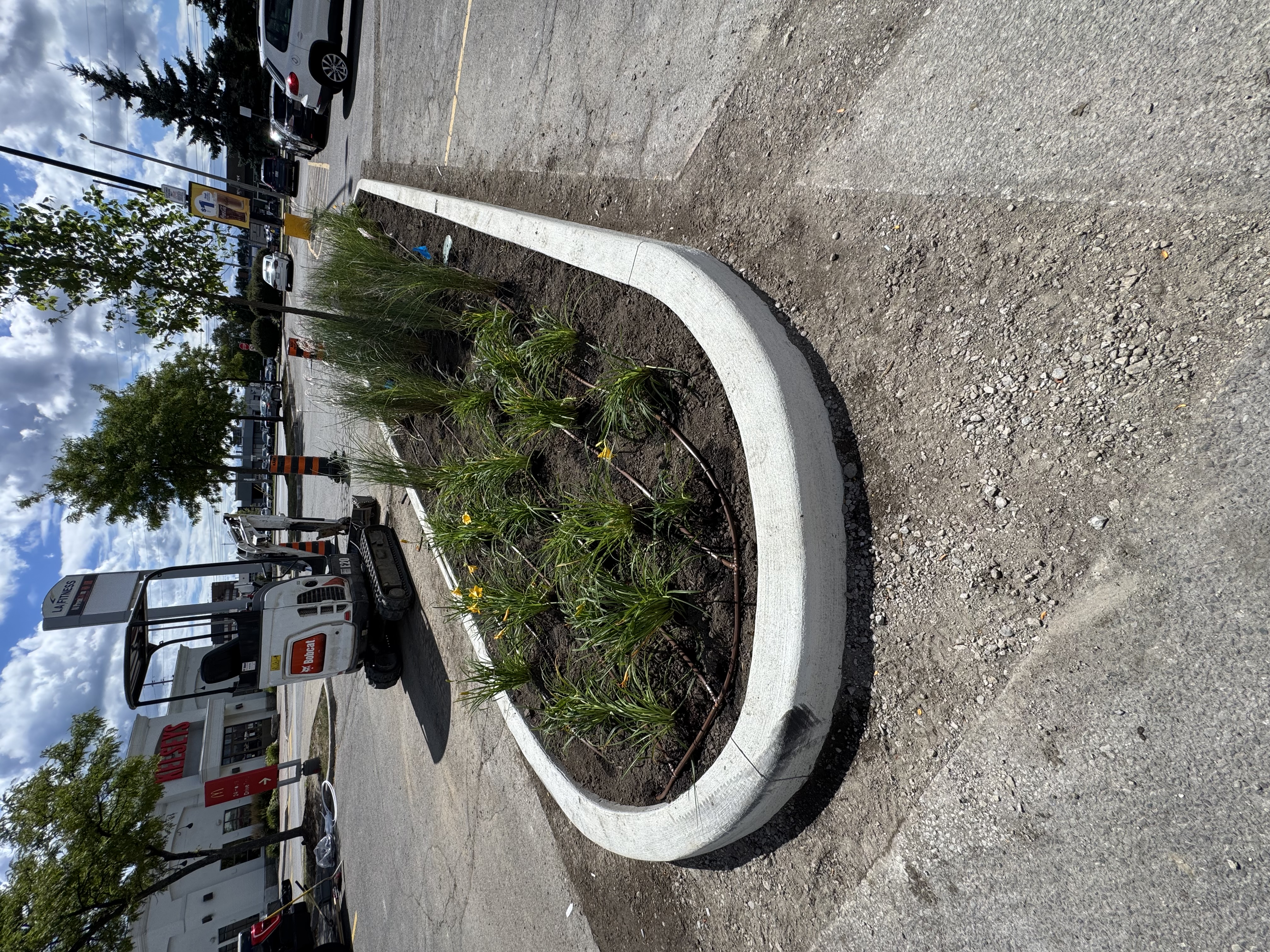
Drip line installed in a commercial parking-lot planter island — daylilies and ornamental grasses with the dripline visible threading through fresh soil
Commercial install
Drip line in a commercial planter — laid before planting, running quietly under the foliage.

Tell us about the bed.

Send us a photo of the planted area you want on drip and rough dimensions. We'll confirm what zone it should be on and quote upfront.

Related services & service areas